A PRAYER FOR THE RESURRECTION OF THE RIGHTS OF MODERN MEN

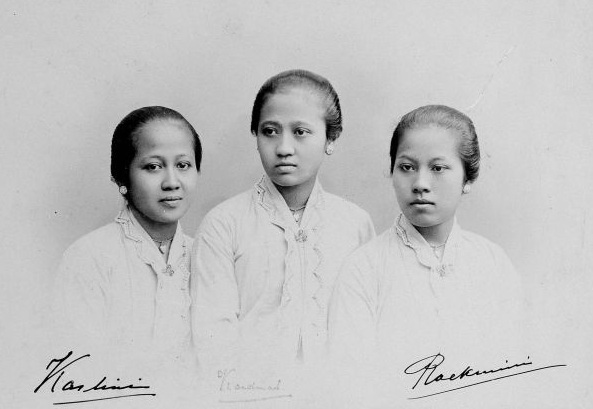
In April 1920 in New York, the eminent Dutch poet Louis Couperus wrote in a foreword to the Kartini letters about the mystery of Java: “There was a quiet strength, “Een Stille Kracht” unperceived by our cold, business-like gaze ……. It was in the bright, silver moonlight when the drooping palm trees trembled in the wind until they seemed to play a symphony so gentle and so complaining that it moved me to my soul. I do not know whether this was poetic imagination ever prone to be supersensitive, or in reality the “Quiet Strength,” hidden in the heart of the East and eternally at war with the spirit of the West. It is certainly true that the Javanese has never been an open book to the Netherlander ……. though they may stand face to face and look into each other’s eyes, it is as though they saw nothing …….

Suddenly a voice was heard from the depths of this unknown land. It rose from behind the high protecting wall that had done its work of subjection and concealment through the ages. It was gentle, like the melodious song of a little bird in a cage—in a costly cage it is true, and surrounded by the tenderest care, but still in a cage that was also a prison. It was the voice of Raden Adjeng Kartini, which sounded above the walls of the close-barred Kaboepaten. It was like the cry of a little bird that wanted to spread its wings free in the air, and fly towards life. And the sound grew fuller and clearer, till it became the rich voice of a woman.

She was shut in by aristocratic traditions and living virtually imprisoned as became a young “princess” of Java; but she sang of her longing for life and work and her voice rose clearer and stronger. It penetrated to the distant Netherlands, and was heard there with wonder and with delight. She was singing a new song, the first complaint that had ever gone forth from the mysterious hidden life of the Javanese woman. With all the energy of her body and soul she wanted to be free, to work and to live and to love.

Then the complaint became a song of rejoicing. For she not only longed to lead the new life of the modern woman, but she had the strength to accomplish it, and more than that, to win the sympathy of her family and of her friends for her ideals. This little “princess” lifted the concealing veil from her daily life and not only her life, her thoughts were revealed. An Oriental woman had dared to fight for feminism, even against her tenderly loved parents. For although her father and mother were enlightened for noble Javanese, they had at first strongly opposed her ideas as unheard of innovations …….

Raden Adjeng Kartini freed herself from the narrow oppression of tradition, and the simple language of these letters chants a paean “From Darkness into Light.”[2] The mist of obscurity is cleared away from her land and her people. The Javanese soul is shown as simple, gentle, and less hostile than we Westerners had ever dared to hope. For the soul of this girl was one with the soul of her people, and it is through her that a new confidence has grown up between the West and the East, between the Netherlands and Java. The mysterious “Quiet Strength” is brought into the light, it is tender, human and full of love, and Holland may well be grateful to the hand that revealed it.

Today, Easter Sunday, I pray that the West can open its eyes to the Kartiniist glories which this website celebrates. These are glories which I believe the West and in particular Western feminism and suffering Western men badly need.

Some background:

The first wave of feminism, of which Kartini was a part, tackled the problem of liberating women from conditions like servitude. The second wave of feminism moved towards more equality and empowered women to much b=greater freedom in how they expressed and conducted themselves.

I have witnessed the third wave of feminism eliminate nearly all inequality disadvantageous to women. But huge parts of the third wave have also degraded mothers and hated men and elevated often dubious female victimhood to an article of faith.

I pray to Almighty God, the partner of Mother Earth in giving us this human home, that a fourth wave can restore a Kartiniist moral purity, free of disrepect for mothers, free of hatred of men and free from an over reliance of victimhood that poisons gender relations in the West now.

Raden Ajeng Kartini described human existence thus on August 17, 1902: “……. hoping, despairing, suffering and rejoicing, weeping and laughing; that is life.”

Lord God, let her inclusive, realist vision spread and prosper in the modern world,

Let it help resurrect the rights of men.

Geoff Fox, Easter Sunday, 2026, Melbourne and Ardeer, Australia
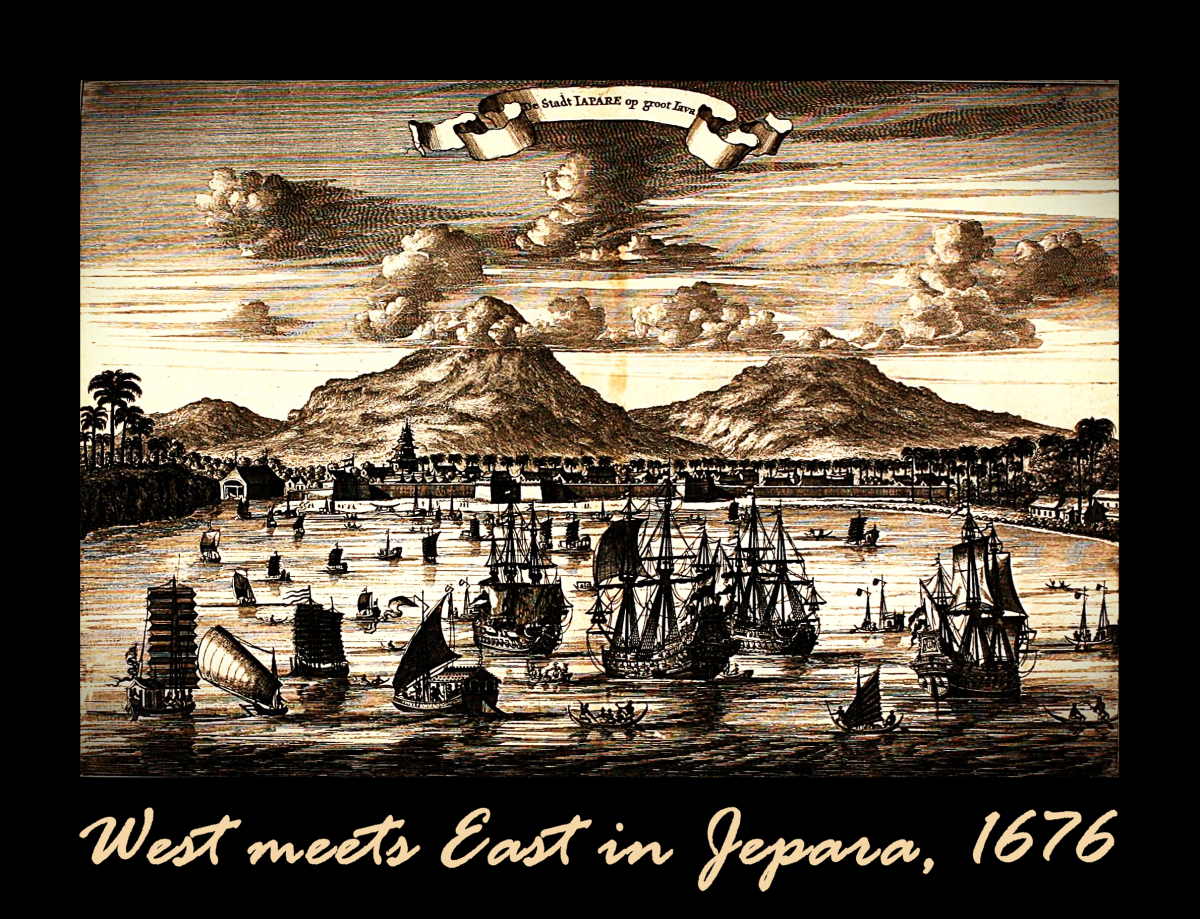
THREE SISTERS OF SOCIAL INNOVATION

R.A. Kartini is an Indonesian national hero for pioneering choice in marriage for women and and education for girls.

She acheived what she acheived in part because of the support of two similar aged sisters and in part because of a deep respect for the culture she was changing:

Shee wrote this on March 29, 1902 about herself and those two sisters:

we three had grown to be one in thought and in feeling.

We have broken with many traditions, and can do what others cannot, on account of the unusual freedom of our bringing up; and now we are working to break tradition still further.

No Javanese girl must be seen before her marriage; she must remain in the background, usually in her own chamber; and in December we were at Semarang with sister, and she went openly into the shops to buy some things which she wanted.

A Javanese girl receives no good wishes upon her engagement; the subject is not mentioned before her; still less does she mention it herself. She acts just as though she knew nothing of it. I should like to have read the hearts of our fellow countrywomen when they heard sister speak openly and freely of her coming marriage.

A day or two before the wedding, we commemorated our dead. That is our custom: in the midst of joy we always invoke the memory of our dead.

Sister sat with crossed legs before the gold shining kwade, motionless as an image of Buddha, between the gravely dressed, solemn-looking wives of the native dignitaries, equal in rank to her husband.

Young girls ought not to have dressed her alone, but we did it just the same. We thought that it was entirely too stupid for us not to be allowed to touch sister in her bridal toilet.

….. when superstition is cast off, we do not want the poetry to be trampled under foot.

There is so much that is lovable in my people, such charm in their simple naive beliefs. It may sound strange, but it is, nevertheless, a fact, that you Europeans have taught me to love my own land and people. Instead of estranging us from our native land, our European education has brought us nearer to it; has opened our hearts to its beauties, and also to the needs of our people and to their weaknesses.”

Geoff Fox, March 29, 2026, West Footscray,

KARTINIIST BOOKS #1 – “11 WORDS FOR LOVE”


In my opinion, the picture book “11 Words For Love” written by Randa Abdel-Fattah and illustrated by Maxine Beneba Clarke is profoundly Kartiniist.

As I see it, the book defines the single most important non-physical ingredient for personal health and social cohesion in family terms which kids and therefore hopefully everybody should be able to understand.

That is what Kartini dedicated her life to doing. That’s what made her a national hero revered in the fourth biggest country in the world, Austraia’s near neighbour, the Republic Of Indonesia.

I believe “11 Words For Love” is a great book. It addresses what Australia (a.k.a. Terra Nullius) desperately needs and has needed for a long time – a social order that begins with love.

Sadly, modern Australia does not  really know what to do with such an idea.

Australia can pretend to love, but was founded on the denial of the existence and rights of others through the concept Terra Nullius.

Here are some discursive thoughts, from me,  on 2 of the 11 words. I hope these ideas help to explain why I find “11 Words For Love”  so wonderfully Kartiniist.

“Al Hob” (The Love) is connected to the word “Habibi” (“my love”, “my dear” or “my darling”) It can be a person’s name in the form Habibie. I regard President BJ Habibie (pictured above with his beloved mum Raden Ayu Tuti Marini Puspowardojo) as Indonesia’s most exciting quick achiever president ever. He gave East Timor more generous terms for a vote on independence than those proposed to Habibie by Australian Prime Minister John Howard. Habibie also established freedom of the press and set many political prisoners free. These were all truly outstanding acts of love.

“Al Wud” is closely related to the word “Wadud” which is  name for God meaning “loving one” and also the name of American born Islamic theologian Amina Wadud who now lives in Yogyakarta in Indonesia and has written, “Those who truly believe in the Quran would equally wish for the woman the opportunities and growth and productivity which they demand for the man.”

I love the way Randa and Maxine have introduced profoundly important concepts from the rich and beautiful Arabic langiage into English literature.

Geoff Fox, March 24th, 2026, West Footscray, Australia

Habislah Gelap Terbitlah Terang

The most famous words of Raden Ajeng Kartini are found in the Indonesian language clause: “Habislah Gelap Terbitlah Terang”. (After the Dark, the Light Rises.)

These words come from her original Dutch language writing: “Door Duisternis tot Licht”.

She wrote those words 123 years ago today, on July 28, 1902, at the age of 23, in this profoundly wise and beautiful letter:

“No cloud lasts for ever; neither is there such a thing as eternal sun-shine.

From the darkest night the most beautiful morning is born and here I console myself.

Human life is a true reflection of the life of nature.

What we must pray for day and night is strength.

But the rain which makes the leaf and bud of one plant burst forth, beats another into the earth, where it rots.”

On this day, in 2025, a very real light in my life, after a horrible period of isolating darkness, is Chris Crewther, a Liberal member of Victoria’s state parliament.

In my dealings with him, Chris has been a perfect embodiment of the Indonesian national ideals, as expressed in the national ideology, Pancasila, of civilised humanity and wise representative government.

There is more than one reason for this astonishing human goodness from Chris, but one key factor IMHO is his healthy rural background:

Geoff Fox, July 28, 2025, Melbourne, Australia

The Joy Of Motherhood

Raden Ajeng Kartini was a first wave feminist and is a national hero in Indonesia.

The pillars of her feminism were:

A. Family. This included deep love and respect for her father and husband.

B. What women are as mothers.

C. Education where teachers strive to be like mothers to their students.

D. Pride in her own people and culture.

If only modern feminists could be more Kartiniist.

I believe that is what a true fourth wave of feminism needs to aim for: no
more misandry and no more marginalisation of mums.

Like Kartini when she wrote with pride of having new life inside her:

Rembang, March 6th, 1904.

My Own Dearest Moedertje:

I wish that I could throw my arms around your neck, I long from my soul to tell you of my great joy, to make you a sharer in our splendid secret. A great, sweet happiness awaits me. If Gods so wills it, toward the end of September, there will come one sent from heaven to make our beautiful life still more beautiful, to draw the bond closer and tighter that already binds us together. Mother, my mother, think of the little soul that will be born from our two souls to call me mother.

Can you picture it? I a mother! I shall make you, old Moedertje, I shall make you a grandmother! Will you come later on to see your grandchild? I shall not be able now to go to Batavia. Our plan was first to go on a journey this month, to take a month’s holiday. Now we must give up the idea. I am not able to travel, and when our little one is here, then, too, I may not travel. So I shall see Batavia no more, at least while you are there. And what would it be worth to me without you and Mijnheer? My husband is so glowingly happy because of this new life which I carry under my heart. That alone was wanting to our happiness.”

(A letter to her friend in Holland written 101 years ago today by Javanese Princess and Indonesian national hero, Raden Ajeng Kartini.)

Kartiniism.

Could this be Indonesia’s great gift to the world?

Geoff Fox, 6th March, 2025, Melbourne, Australia

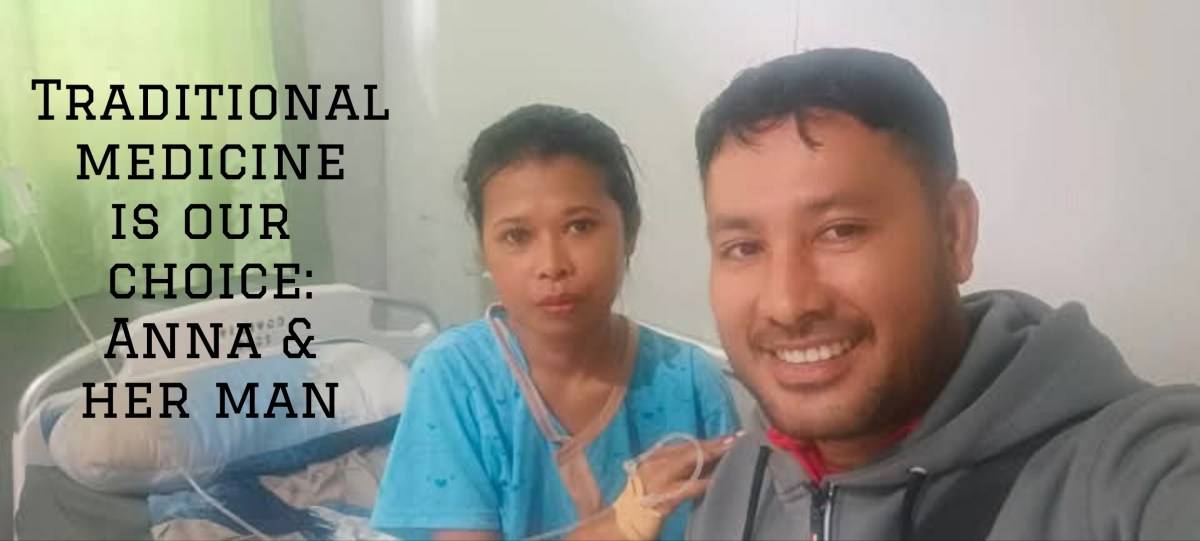
Anna Menolak Dan Anna Nrimo – A Woman Of Faith

Anna R is a deeply patriotic, Kartiniist citizen of the Republic Of Indonesia.

Anna embraces the modern world and international friendship. As a student of tourism, her decade long commitment to international engagement has won deep respect from all who know her.

This commitment from Anna reminds me of the words of R A Kartini written on February 1, 1903, “I am also glad to do what I can for “East and West.” I feel that I am only doing myself a service, for it is for our people, and I and my people are one.”

Anna, like Kartini, sees international engagement as a service to the Indonesian people.

But, like Kartini, whose great achievements were made at home and not abroad, there are certain issues where Anna steadfastly chooses her traditional culture ahead of the sometimes mechanical impersonal ways of the west.

For Anna R, for better or for worse, traditional medicine such as Jentungan Suntung has proved effective. Whereas in Anna’s real life experience modern surgery is terrifying and sometimes dangerous.

Her husband fully supports her in her choice. Today he carried her in his arms out of a modern hospital to seek traditional care.

I admire their courage.

Their bravery is founded in a reality of faith.

Today Anna wrote this prayer:

“Tuhan ini takdirku
Yang telah kau Tetapkan
Aku ikhlas semuanya
Tapi jgn biarkan Aku menyerah
Ajari aku tuntun aku agar bisa Kuat.”

(Lord, this is my fate, which you have ordained. I accept it all. But please do not let me become a quitter. Teach and lead me so I can be strong.)

Anna is suffering badly from a very serious illness. But her faith in God and the old ways of her people is rock solid strong.

Habislah gelap terbitlah Terang. (RA Kartini)

After the dark, let light rise.

Geoff Fox, in awe of Anna from Down Under, 16th February, 2025.

Kartini on Mother Nature, Education and how Women Civilise Men.

On January 21, 1901, 124 years ago today, R.A. Kartini wrote these thoughts:

“We went at midday to the shore with Mevrouw Conggrijp to bathe. It was splendidly calm, and the sea was all one colour. I sat on a rock with my feet in the water, and my eyes on the distant horizon. Oh! the world is so beautiful! Thanksgiving and peace were in my heart. If we go to Mother Nature for consolation she will not allow us to go away uncomforted.

I have thought so long and so much about education, especially of late, and I think it such a high, holy task …………..

Education means the forming of the mind and of the soul.

…………

I subscribe warmly to Mijnheer’s idea, which is set forth so clearly in his paper on the “Education of Native Girls,” “Woman as the Carrier of Civilization!”

…………..

Man receives from woman his very earliest nourishment, at her breast, the child learns to feel, to think and to speak; and I see more and more clearly that the very earliest education has an influence which extends over one’s whole after life.”

Geoff Fox, January 21, 2025, Australia

KIND-HEARTED KARTINI and CLIMATE CHANGES

Devastating climate change has been a part of God’s creation for a long time.

On January 17, 1903, (normally the wet season) Raden Ajeng Kartini wrote this to her friend in Holland about an unseasonal drought in Java:

“For three longs weeks not a drop of rain has fallen. It is boiling hot as it has never been before, even in the dryest Oostmoesson.

Father is in despair; the young rice in the fields is turning brown, Oh, our poor people! So far they have had enough to eat here and they do not know the most frightful of all calamities which a land can suffer—Famine. But what has not been, may be; and this great drought in the time of the wet season presages anything but good. What will happen if it keeps up? For several mornings the wind has blown as it usually does first in May. Has the turning point been reached, has the dry season begun?

It is frightful, every one looks on helpless. It is hard to see everything that has been sown and planted turn brown and die, without being able to turn a finger to help it, and the great heat harasses the body too; one feels dull and listless.

What do you think of such a complaint from a child of the sun? Oh, how frightful for the people who are working out in the fields, if for us in here it is so scalding hot, and this is the wet season (Westmoesson). Do not be chary with your cold; could you not spare a little of it? You may take as much of our warmth as you wish.”

Here is my attempt to write lyrical musings from the above:

“The Child Of The Sun

Take our heat, old Holland, and let us keep some of your cold.

Our people must eat,
But our crops are all dead
In a drought my heart dreads.
So let us get some of your cold.”

Geoff Fox, January 17, 2025, Australia

Meeting SBY – I saw his Kartiniist Soul.

On the 8th of August, 1903, Javanese princess and common people’s advocate Raden Ajeng Kartini wrote of a deeply meaningful meeting she had with a village midwife:

“Just now we have company; at the table where I sit there are five of us working. Justinah the wise woman came this morning and will stay until next week. We think her a treasure. She spends her time here usefully, teaches embroidery and is so severe when we are careless. When we make a mistake, she immediately pulls everything out. How rich I felt this morning when she laid her hand trustingly on my shoulder, while I explained something or other to her. Now she feels at home with us; I look with so much pleasure into her fine intelligent eyes; they say so much.

She is a dessa-child. Oh, how full of love is her calling! You would enjoy meeting her. She listens with attention when one speaks, and then asks such intelligent questions. If you ever come to our neighbourhood again, I hope to be able to take her to you. This clever little woman has already attended forty-eight women in child-birth, and she is such a young thing still, with all a child’s eagerness.”

Exactly one hundred and ten years years later on the 8th of August, 2013, I was blessed to meet an astonishimg Indonesian man, Susilo Bambang Yudhoyono, (SBY), who rose from birth into a lower middle class family in the very small village of Tremas (about 8 kilometre north northeast of the alun-alun in Pacitan on the glorious south coast of East Java) to become the first two-term democratically elected president of his homeland, Indonesia, the fourth largest nation on earth.

I told SBY in that very brief meeting a little bit both about the results of my cross cultural engagement with a wonderful grassroots man, Mr Syukur Kuseke, the traditional owner of Air Kaca, a national heritage (cagar budaya) site in Morotai and about my dad’s time in Morotai in World War Two. SBY said that he would like to visit Air Kaca. The president met very many people that day so my time with him was limited, but, as I left the room in the presidential palace, SBY’s eyes followed me with a child like eagerness to know more that I will never forget.

Alhamdullialh.

I praise the Lord for allowing me that treasured memory of meeting SBY.

The villages of the world are frequently where the greatest joys and purity are found, created and nurtured for us all.

Mbah Jeff (sudah tua), December 2nd, 2024, Melbourne, Australia

The Children Are The Future

To the people of the Republic Of Indonesia, I report a statement on the 8th of August 1903 by my personal heroine Raden Ajeng Kartini as she awaited her approaching marriage:

“The children are to be my future, and I shall live and work for them, strive, and suffer, if need be, for them.”

More recently, a significant event which also happened on the date of August 8, was in 1984: the birth of Sherly Tjoanda who is now set to become the governor-elect of North Maluku.

Congratulations, Sherly.

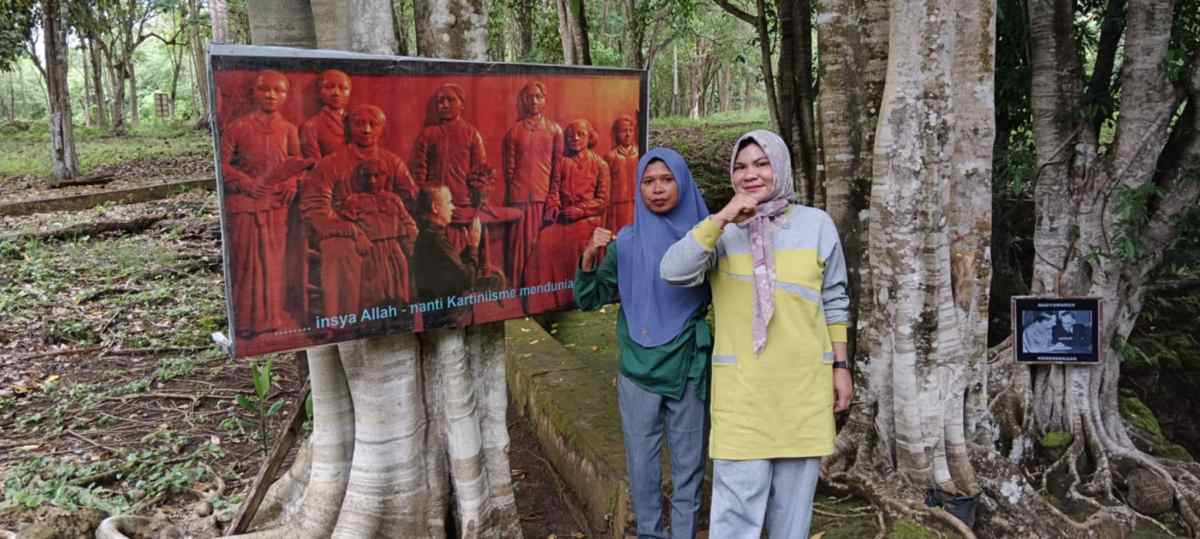
InsyaAllah nanti Kartiniisme mendunia.

Geoff Fox, budayawan, Melbourne, Australia, December 2nd, 2024.